Skipping Boracay: Why More Americans Are Discovering the Quiet Magic of Caliraya's Freshwater Shores
For years, the Philippine travel playbook for American visitors looked pretty much the same: fly into Manila, spend a night recovering from the jet lag, then hop a connecting flight to Boracay or Palawan. White sand, cold San Miguel, repeat. It's a formula that works — those places are genuinely stunning — but somewhere along the way, a different kind of traveler started asking a different kind of question.
What if I didn't want a beach?
That question is leading more and more Americans to Caliraya Lake, a man-made reservoir nestled in the mountains of Laguna province, about three hours southeast of Manila. And once they get there, a lot of them don't want to leave.
The Burnout Behind the Trend
There's a reason travel industry insiders have been talking about "overcrowded paradise syndrome" for the better part of a decade. Boracay's famous White Beach, once a backpacker's dream, now hosts thousands of tourists daily during peak season. Palawan remains breathtaking, but its most iconic spots — El Nido, Coron — have become logistical puzzles requiring advance booking months out and significant budget flexibility.
For American travelers, many of whom are already navigating long international flights and limited vacation days, arriving at a dream destination only to find it packed shoulder-to-shoulder can feel genuinely deflating. The Instagram version and the lived experience stop matching up.
Caliraya offers something different by design. It's not undiscovered — Filipinos have been heading to the lake for weekend retreats for decades — but it hasn't been packaged and marketed to international tourists the same way the coastal heavyweights have. That gap is exactly what's drawing a certain type of traveler in right now.
What Freshwater Actually Feels Like
Here's something that surprises a lot of first-timers: there's a distinct sensory difference between a saltwater beach vacation and a freshwater lake retreat, and for many people, the lake wins.
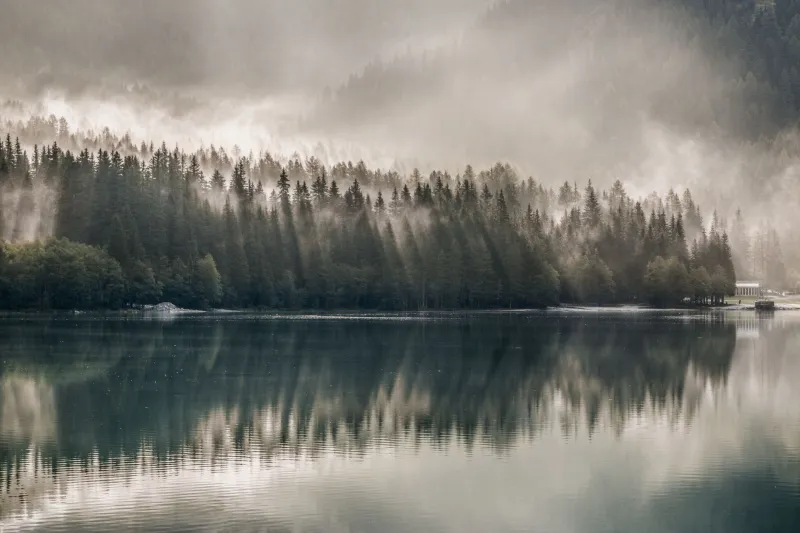
At Caliraya, the water is calm. Not "calm for a beach" calm — genuinely still, mirror-flat on most mornings, reflecting the pine-covered hills and the wide Philippine sky back at you in a way that feels almost cinematic. There's no undertow to worry about, no salt drying on your skin, no constant noise from waves. The air smells like earth and forest rather than brine.
Sarah M., a landscape photographer from Portland who visited Caliraya last year while building a Southeast Asia portfolio, described it this way: "I've shot sunrises on beaches all over the world, and they're beautiful. But there's something about the way the mist sits on a mountain lake in the early morning that just hits differently. I ended up staying four extra days because I kept waking up to shots I couldn't believe were real."
For photographers — amateur and professional alike — Caliraya is something of an undiscovered goldmine. The reflections on the lake surface, the fog that rolls in during cooler months, the surrounding hills dotted with pine trees that feel more like Northern California than Southeast Asia: it's a visual landscape that doesn't look like the Philippines most people have seen on social media. That novelty alone makes it worth the detour.
The Slower Pace Is the Point
Caliraya's appeal isn't just about aesthetics. It's about rhythm.
The lake region operates at a pace that's genuinely slower than Manila's relentless energy or the organized chaos of a peak-season beach resort. Mornings tend to be quiet. Afternoons drift. Evenings involve sitting somewhere with a view and not feeling like you need to be somewhere else.
For Americans conditioned to pack every vacation hour with activity, that decompression can feel strange at first. But travel therapists and wellness-focused travel writers have been making this case for years: the destinations that actually restore you aren't necessarily the ones with the longest activity lists. Sometimes restoration looks like a kayak on a still lake at 7 a.m. with nowhere to be.
That ethos maps cleanly onto the broader slow travel movement that's been gaining traction among US travelers in their 30s and 40s — people who've done the whirlwind trip and are now looking for depth over breadth, presence over productivity.
A Lower-Impact Way to See the Philippines
There's also an environmental dimension to this shift that's worth naming directly.
The Philippines' most famous destinations have faced real sustainability pressures. Boracay underwent a government-mandated six-month closure in 2018 due to environmental degradation. Palawan's ecosystems, while still remarkable, are under increasing strain from tourism volume. Travelers who care about the ecological footprint of their trips are increasingly aware of this.
Caliraya, by contrast, sits within a watershed that serves genuine ecological and agricultural functions for the surrounding communities. Tourism here is lighter-touch by nature — smaller accommodations, fewer large-scale resort developments, more direct economic connection between visitors and local providers. It's not a perfect equation, but it's a meaningfully different one.
For the traveler who wants to feel good about where their vacation dollars are going, choosing an emerging destination over an oversubscribed one is a form of intentionality that increasingly matters.
Getting Here Without the Headache
One practical factor that makes Caliraya accessible for American travelers is its proximity to Manila. You don't need another domestic flight or a ferry connection. A comfortable three-hour drive from the capital — doable by private van, bus, or hired car — puts you at the lake. That simplicity reduces cost, reduces carbon footprint, and reduces the logistical stress that can eat into a vacation before it even starts.
Many travelers are now building Caliraya into a broader Philippine itinerary as a deliberate counterweight to busier stops. A few days in Manila, a long weekend at Caliraya to reset, then onward to wherever the trip takes them. The lake serves as a kind of palate cleanser — a place to breathe before the next adventure.
The Destination That Doesn't Try Too Hard
Maybe the most honest way to describe Caliraya's appeal is this: it's a place that isn't performing for you.
There are no elaborate tourism infrastructure setups, no scripted cultural experiences designed for international consumption, no pressure to maximize every moment. What's there is the lake, the hills, the mist, the quiet — and the space to actually be somewhere instead of just passing through it.
For Americans who've spent years chasing the perfect beach trip and come back feeling vaguely like they missed something, Caliraya has a way of delivering what the beach couldn't quite manage.
Sometimes the most restorative thing you can find on the other side of a 16-hour flight is stillness. And Caliraya has that in abundance.