Forget Bali: Why Caliraya Lake Is the Smarter Move for American Remote Workers in Southeast Asia
Every American remote worker with a passport and a Slack account has heard the pitch for Bali. The rice terraces, the yoga studios, the co-working cafes with cold brew on tap. It sounds perfect—until you land in Canggu during peak season and realize you're surrounded by four hundred other people who had the exact same idea.
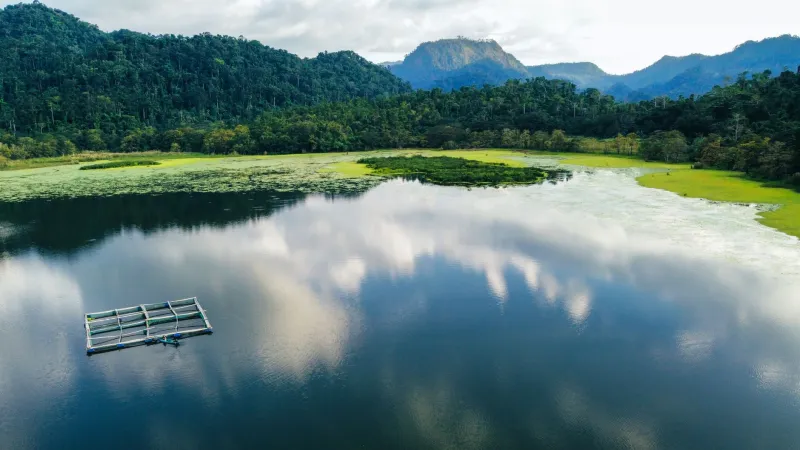
Caliraya Lake, tucked into the highlands of Laguna province about two hours from Manila, doesn't have a PR problem. It has the opposite problem: not enough people know it exists. And for the growing number of American remote workers who've stumbled onto it, that's precisely the point.
So let's do what travel writers rarely do and actually compare the numbers, the logistics, and the lifestyle—because Caliraya holds up better than you'd expect.
The Cost Conversation Nobody Wants to Have About Bali
Bali's reputation as a budget destination is increasingly a myth. A decent villa in Canggu or Seminyak with reliable Wi-Fi runs anywhere from $1,200 to $2,500 a month once you factor in tourist-season pricing. Add co-working day passes ($10–$20 each), meals at the spots that actually cater to Western palates, scooter rentals, and the occasional temple ceremony entrance fee, and you're easily looking at $2,500 to $3,500 per month before you've bought a single souvenir.
Caliraya flips that math. Lakeside cottages and resort-style accommodations with private setups rent for roughly $400 to $900 per month depending on the season and how far in advance you book. Local meals—proper Filipino food, not a watered-down version of it—run $2 to $5. Even the nicer sit-down spots near the lake rarely break $10 a plate. A realistic monthly budget for a comfortable, non-austere lifestyle around Caliraya lands somewhere between $1,200 and $1,800. That's not a rounding error. That's a plane ticket home.
Internet: The Question That Actually Matters
Chiang Mai built its digital nomad reputation in part on fiber internet that puts American suburban broadband to shame. Ho Chi Minh City isn't far behind. Bali is more inconsistent—great in the right co-working space, genuinely frustrating if you're relying on villa Wi-Fi.
Caliraya sits in a middle ground that surprises most first-timers. The Philippines has invested heavily in improving connectivity outside Metro Manila, and Laguna province—being close to the capital and part of a developed tourism corridor—benefits from that infrastructure push. Globe and PLDT both have solid LTE coverage across most of the Caliraya area. Several lakeside properties have upgraded to fiber or hybrid fiber setups specifically to attract remote-work guests.
Will you get the 200 Mbps speeds of a Chiang Mai co-working hub? Probably not. Will you get a reliable 25–50 Mbps connection that handles video calls, cloud uploads, and the occasional Netflix session without drama? In most cases, yes. The honest caveat: do your homework on specific properties before booking, and if your work involves constant large file transfers, ask hosts directly about their setup. Most are used to the question.
Visa Reality Check
This is where Caliraya—and the Philippines broadly—quietly wins in a way that rarely gets enough attention.
Americans arriving in the Philippines get 30 days visa-free, extendable to 59 days at the Bureau of Immigration with minimal paperwork. From there, extensions can be stacked up to a maximum stay of around three years, with each extension costing roughly $50–$70 and requiring a visit to an immigration office. It's not the most elegant system, but it's functional and well-established.
Compare that to Indonesia, where the visa situation has been in flux. The much-discussed Indonesian Digital Nomad Visa has had a rocky rollout, and Americans have frequently found the application process unclear or inconsistently enforced. Thailand's options are better structured but involve more upfront cost and planning. Vietnam's e-visa is straightforward for shorter stays but gets complicated for long-termers.
For someone who wants to land, get settled, and focus on work rather than immigration logistics, the Philippines keeps things simple in a way that genuinely matters.
What Caliraya Offers That Bali Simply Can't
Here's where the comparison stops being about numbers and starts being about feel.
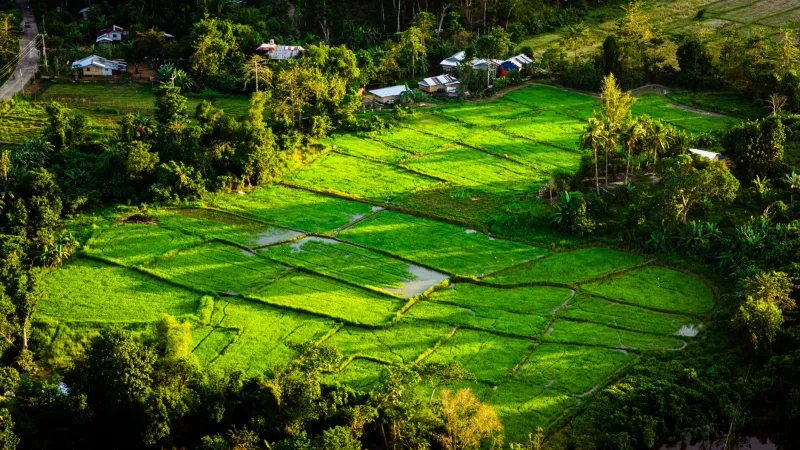
Bali is beautiful. It's also loud, crowded, and—in the tourist corridors—increasingly performative. The "authentic experience" often requires hiring a driver to take you an hour outside town to find it. Caliraya doesn't have that problem because it hasn't been packaged yet. The lake is genuinely peaceful. The surrounding mountains are actually quiet. The locals you interact with are not tourism workers running through a script—they're farmers, fishermen, and townspeople who are pleasantly surprised to see a foreigner and happy to talk.
There's also something to be said for the Filipino approach to hospitality, which feels less transactional than what you encounter in heavily touristed parts of Southeast Asia. English is widely spoken throughout the Philippines, which removes a friction point that even seasoned travelers in Thailand or Indonesia deal with regularly.
And then there's the nature. Caliraya Lake sits at around 1,700 feet above sea level, which means temperatures hover in the low-to-mid 70s Fahrenheit for much of the year—a significant upgrade from the sweaty, sea-level heat of coastal Bali or Ho Chi Minh City. If you've ever tried to concentrate on a deadline while sweating through your shirt, you understand why this matters.
The Honest Downsides
No comparison is complete without them. Caliraya is not a city. There's no co-working scene in the Chiang Mai sense—no buzzing hubs with espresso bars and standing desks. You're largely working from your accommodation, which means your choice of property matters enormously. The nightlife is minimal by design. Getting to Manila for a flight or an in-person meeting takes two to three hours depending on traffic, and Manila traffic is legendarily unpleasant.
If you need the social infrastructure of a full nomad hub—the meetups, the networking, the sense of a community of like-minded workers—Caliraya will feel isolated. It's better suited to someone who already has their work rhythm locked in and wants an environment that supports deep focus rather than constant stimulation.
Who Caliraya Is Actually For
Caliraya Lake makes the most sense for American remote workers who are past the novelty phase of location independence. You've done the co-working cafes. You've done the hostel common rooms. Now you want somewhere that feels like a real base—quiet enough to actually be productive, beautiful enough to remind you why you made the leap in the first place, and affordable enough that you're not quietly calculating runway every time you order dinner.
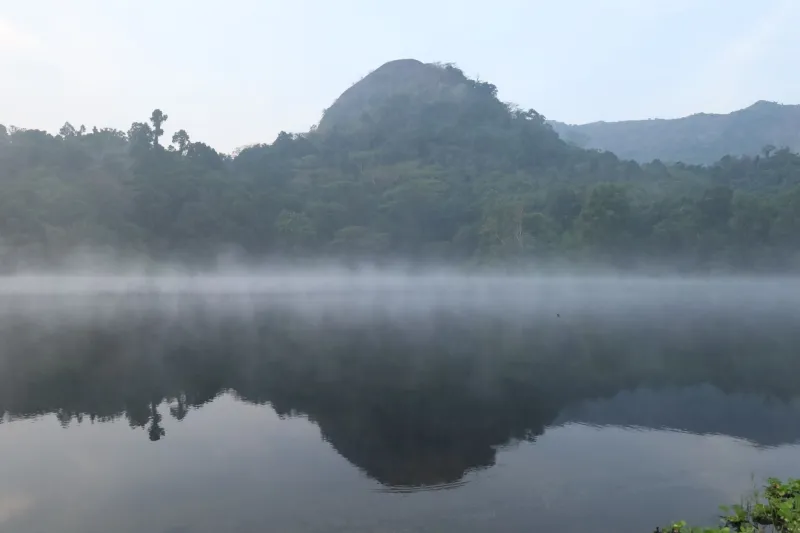
If that sounds like where you are right now, Caliraya deserves a longer look than it typically gets. The crowds haven't arrived yet. The prices haven't caught up to the experience. And the lake—on a clear morning with the mist still sitting on the water—is the kind of view that makes you feel like you made a very smart decision.
You probably did.