Unplug, Unwind, and Rediscover Yourself at Caliraya Lake
Somewhere between your fourth consecutive Zoom call and the moment you realized you hadn't eaten lunch — again — a small voice probably whispered: I need to get out of here.
Most Americans in that headspace start Googling wellness retreats in Costa Rica, meditation centers in Bali, or yoga packages in the Arizona desert. And sure, those places are beautiful. They're also expensive, increasingly crowded, and frankly, kind of exhausting to plan.
Here's what a growing number of remote workers and road-weary professionals are discovering instead: Caliraya Lake, tucked into the mountains of Laguna province in the Philippines, about three hours southeast of Manila. It's not on most American travel radar yet — and honestly, that's a big part of its charm.
What Makes Caliraya Different From Every Other "Wellness" Destination
Let's be real. A lot of so-called digital detox destinations have become anything but. Instagram-perfect resorts with spotty Wi-Fi that still somehow attracts a crowd of influencers with ring lights. Caliraya hasn't reached that tipping point.
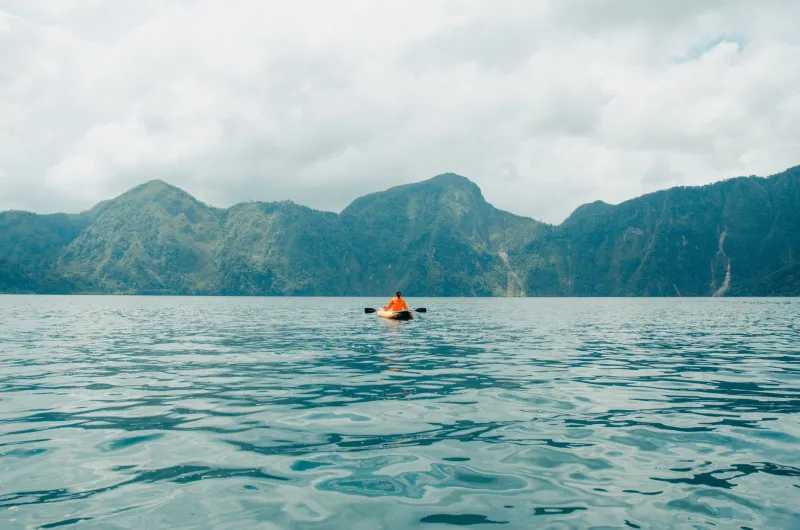
The lake sits at roughly 1,200 feet above sea level, surrounded by pine trees and rolling hills that look more like the Pacific Northwest than Southeast Asia. The air is noticeably cooler than Manila's coastal heat. The pace is slow in the best possible way — not because there's nothing to do, but because the environment itself gently discourages urgency.
There are no beachside nightclubs. No resort casinos. No aggressive vendors hawking overpriced souvenirs. What you do get is a wide, quiet lake, a handful of well-run resorts and guesthouses, and the kind of natural stillness that makes your nervous system actually exhale.
Real Talk: What Remote Workers Are Saying
Jamie, a UX designer from Portland who spent six weeks working remotely from a lakeside resort in Caliraya, put it simply: "I booked it as an experiment. I figured if I hated it, I'd just go back to Manila. I extended my stay twice. The combination of fast enough Wi-Fi, genuinely peaceful surroundings, and the fact that I could kayak before my morning standup — that was something I couldn't find in a $400-a-night Arizona retreat."
Marcus, a freelance copywriter from Austin, took a different approach — a full two-week tech sabbatical with no work at all. "I told my clients I was offline. I left my laptop at home. I brought one paperback novel and a journal. By day three I was sleeping nine hours a night. By day seven I remembered what it felt like to be bored, in a good way. That hasn't happened since I was a kid."
These aren't outliers. Online communities for digital nomads and remote workers are increasingly flagging Caliraya as an underrated long-stay destination, particularly for Americans who want the budget flexibility of Southeast Asia without the sensory overload of Bangkok or Bali.
The Activities That Actually Help You Disconnect
Here's the thing about unplugging: it works a lot better when you replace screen time with something physical and present. Caliraya delivers on that front.
Kayaking and wakeboarding on the lake are the obvious draws. The water is calm most mornings, which makes paddling meditative rather than strenuous. Wakeboarding, on the other hand, demands every bit of your concentration — it's almost impossible to ruminate about work deadlines when you're trying not to wipe out.
Hiking the surrounding hills offers a different kind of reset. Trails wind through forested terrain with views of the lake below, and the relative lack of tourist infrastructure means you're unlikely to share the path with a crowd.
Fishing is another option that sounds deceptively simple until you actually try it. Sitting at the edge of a lake with a line in the water, watching the morning mist lift — it's the kind of low-stimulation activity that Americans rarely give themselves permission to do.
For those who want structured wellness programming, several resorts offer yoga sessions, meditation workshops, and even cooking classes focused on traditional Filipino cuisine. None of it feels forced or performative.
The Cost Factor (And Why It Matters)
A week at a mid-range wellness retreat in the US can easily run $3,000 to $5,000 — and that's before flights, supplements, and the inevitable overpriced smoothie menu. Caliraya operates in a completely different financial universe.
Lakeside accommodations range from budget guesthouses at around $25–$40 per night to more comfortable resort-style rooms at $60–$120 per night. Meals at local restaurants and resort dining rooms are remarkably affordable by American standards — a solid Filipino breakfast with fresh fruit, rice, and coffee typically runs under $5. A full day of lake activities, including equipment rental and instruction, might cost $30.
For a two-week stay with comfortable accommodations, three meals a day, and a generous activities budget, many travelers report spending less than $1,500 total — not counting flights. Round-trip flights from the West Coast to Manila currently run anywhere from $600 to $900 if booked in advance, putting the full trip well under what a domestic wellness retreat would cost.
Practical Things Worth Knowing Before You Go
Caliraya isn't completely off the grid, and that's intentional here — most resorts offer Wi-Fi, which means you can do a hybrid approach if a full blackout isn't realistic. Many remote workers use this to their advantage, working compressed hours in the morning and spending the rest of the day fully offline.
The best time to visit is during the dry season, roughly November through April, when the lake is at its most serene and the mountain air is crisp. The rainy season (June through October) brings lush green scenery but also occasional storms that can limit water activities.
Getting there from Manila involves a bus or private transfer to the Laguna region — most resorts can arrange airport pickup, which simplifies the logistics considerably. Once you're there, you won't need a car. Everything is walkable or reachable by short tricycle ride.
A valid US passport gets you a 30-day visa-free entry to the Philippines, with extensions available for longer stays. The local currency is the Philippine Peso, and ATMs are accessible in nearby towns.
The Quiet Revolution of Slow Travel
There's a larger shift happening in how Americans think about vacations and mental health. The old model — pack in as many sights as possible, document everything, return home exhausted — is quietly losing its appeal. More people are opting for longer, slower stays in places that offer genuine restoration rather than a highlight reel.
Caliraya fits that shift perfectly. It's not trying to be the next big thing. It's not chasing luxury travelers or building rooftop bars. It's just a lake in the mountains that has been quietly beautiful for decades, waiting for people who are ready to actually stop.
If your body has been running on caffeine and calendar notifications for longer than you'd like to admit, that might be worth paying attention to.
The lake isn't going anywhere. But neither is your burnout — until you do something about it.